The Role of Public Policies and Authorities' Actions in Reducing Political Clientelism
Automatically translated summary. The full article is available in Romanian.
A study on political clientelism and public investment, presented online on 29 June by Expert-Grup and its partners, finds that the allocation of central budget funds to local authorities in Moldova's 2021 state budget is linked to political affiliation, especially for capital expenditure transfers.
According to the 2021 State Budget Law, localities led by mayors from the governing parties are to receive inter-budgetary transfers 40.2% larger than those run by non-affiliated administrations. Only 44% of localities with non-affiliated mayors (281 of 637) will receive capital expenditure funds, compared with 69% of those with governing-party mayors (162 of 235).
Tatiana Ivanicichina of the Ministry of Finance said the government decision on the capital investment evaluation working group is being amended, so that projects pass a ministry filter before entering the budget. Stanislav Ghilețchi noted that formula-based transfers do not fully protect against clientelism. The authors recommend stronger institutions, greater transparency and participation, delegating allocation to politically independent bodies or specific rules, and a mechanism for evaluating all investment projects.
Other articles in the same category
See all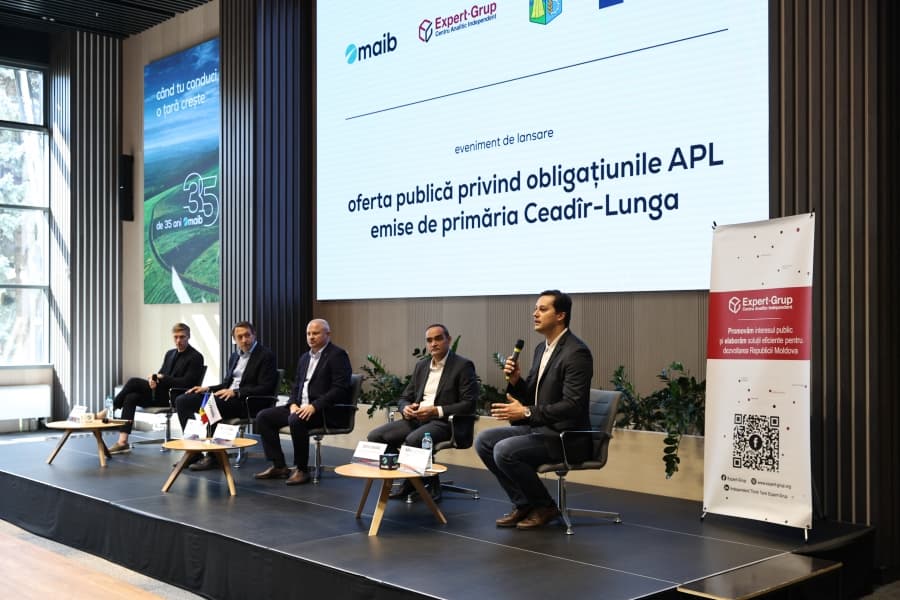
Ceadîr-Lunga Launches Its Third Municipal Bond Issue, Raising MDL 8 Million for Local Projects

24 Municipalities from the Republic of Moldova Complete a Study Visit to the Kingdom of the Netherlands

Winners of Tulip Business Incubator 3.0 Announced: Five Businesses to Receive EUR 5,000 Grants and Mentoring